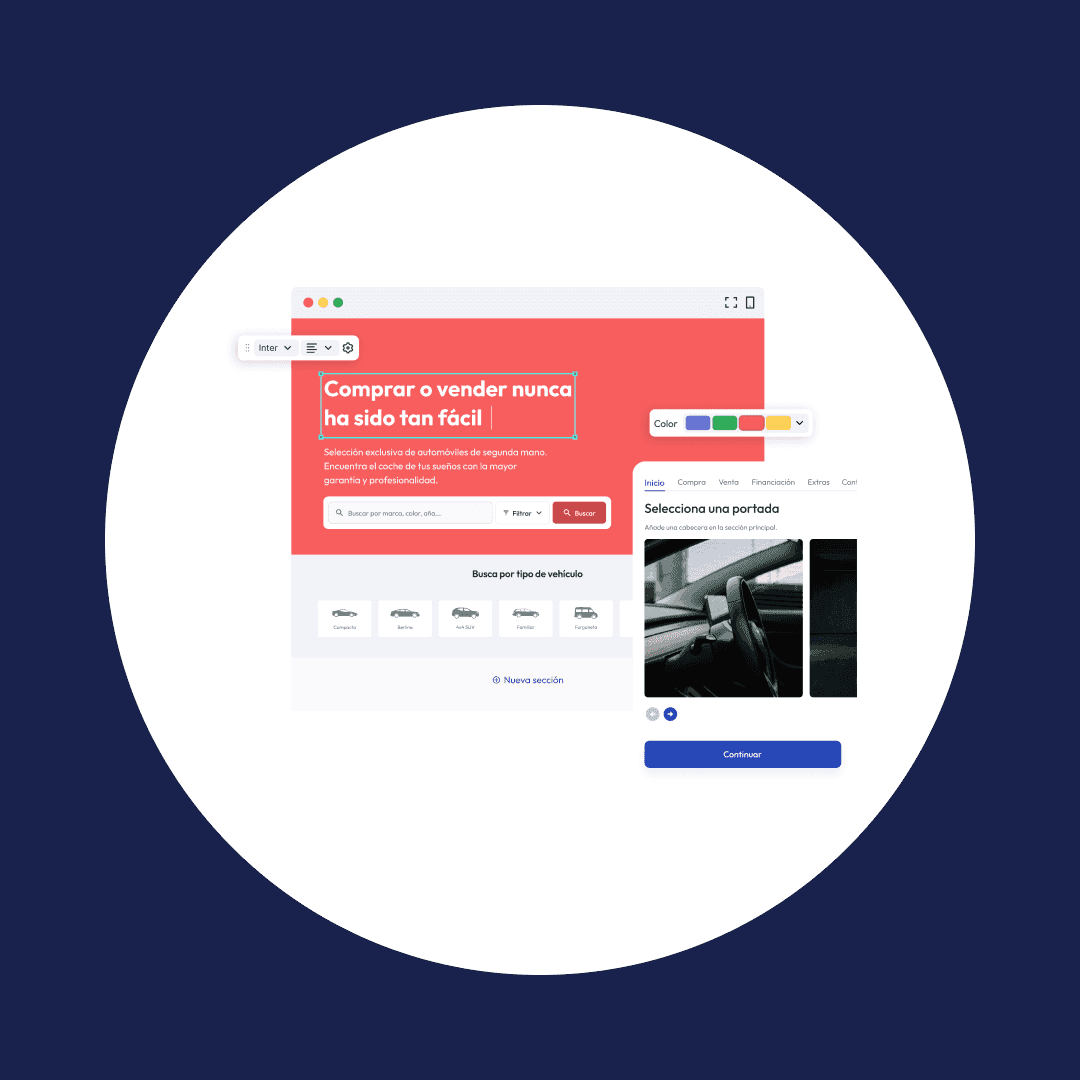
An online presence has become essential for any business today, including dealerships. Most people search for products and services online before making a final purchasing decision. Therefore, if you have a dealership but do not have a website, you are missing out on a large number of opportunities.
Having an effective website can make a huge difference to the success of your car sales business. Below, we will explore some of the main benefits of having your own website for your dealership.
Improve your dealership’s visibility
A website allows you to reach a wider audience than you could achieve through traditional or physical marketing alone. Your website is available 24/7, which means that even when your physical showroom is closed, you can still attract and educate your potential customers.
In addition, with the right search engine optimisation (SEO), your website can appear on the first pages of Google results when users search for terms related to buying and selling cars. This greatly increases the visibility of your business.
Optimising the SEO of a dealership website can be complicated, but there are some good practices that can be implemented, such as:
Choosing the right keywords related to your business and your geographical location. Example: Used cars at the best price in Alicante.
Creating quality content that is useful and relevant for your visitors. Example: A guide to the factors to consider when buying a used car.
Improving loading speed and the mobile user experience to offer a better digital experience for your potential customers.
Generating quality backlinks from other related websites to attract quality traffic from different sources.
If you manage to rank in the top search results for key vehicle buying and selling terms, you will be able to attract much more traffic from highly interested potential customers.
Attract more potential customers
A well-designed, easy-to-use website can be a powerful tool for attracting new customers. You can use your website to showcase your available vehicles, provide detailed information about each one, and answer frequently asked questions.
Some ways to attract more traffic and leads to your dealership website include:
Offering valuable content such as guides, tips and informative articles
Creating competitions and giveaways to increase engagement on social media
Using effective calls to action to encourage contact and booking forms
Segmenting the database to send relevant automated emails
Integrating with Google My Business to appear on local maps
If your website is well optimised and offers a good user experience, it will not only help inform and educate your visitors, but it can also help you convert more of them into leads or even sales.
Provide complete information about your vehicles
On your website, you can offer all the relevant information about the cars you have for sale. From technical details such as mileage or age to high-quality photos of the vehicle’s interior and exterior.
This transparency not only helps the potential customer make an informed decision, but also builds trust in your business. And as you know, trust is key in a sector such as automotive.
Some details that should not be missing from each vehicle listing:
Make and model
Year/age
Mileage
Fuel type
Power
Equipment and accessories
Service history
Photo gallery
Videos
The more relevant information you can provide, the better. This will avoid disappointments or misunderstandings later in the sales process.
Make it easier for your customers to search for cars
Good web design makes it possible to create intuitive systems to filter and search among all the cars available at the dealership. Users can search for a specific type of car or filter by make, model, price or other features that are important to them.
Implement advanced search filters such as:
Price/price range
Make and model
Fuel type
Mileage
Year of manufacture
Gearbox type
Number of doors
This greatly simplifies the search process and improves the user experience on your page. Helping visitors quickly find their preferred cars increases the chances of conversion.
Allow appointments and test drives to be booked
In addition to showing information about the vehicles available, a website allows you to offer additional features such as online booking for test drives or personalised consultations.
Allowing users to book appointments or request information directly from your website through contact forms can be very valuable both for them and for you. Some recommendations for implementing this correctly:
Integrate the form with your CRM to centralise leads
Send automated confirmations and reminders via email and SMS
Ask for the minimum amount of necessary data so as not to put people off
Have a clear process for how and when you will contact the lead
In this way, potential customers can schedule a visit to your dealership at a time that suits them, which can increase the likelihood that they will ultimately make a purchase.
Build trust with quality content
A website gives you the opportunity to demonstrate your experience and knowledge in the automotive sector. You can publish blog articles on topics relevant to your customers, such as tips for buying a used car or how to keep their vehicle in good condition.
Some types of content you can create:
Step-by-step guides
Top lists and recommendations
Useful tips and tricks
Attractive visual content such as infographics
Explanatory videos or virtual tours
Success stories from satisfied customers
This type of content not only helps educate your visitors, but also establishes your business as a trusted authority in the field. This is key to generating credibility and trust in your brand.
Sell accessories and additional services
In addition to cars, you can use your website to sell vehicle-related accessories or even additional services such as maintenance, repairs or extended warranties.
Design specific sections on your website to promote these additional services. For example:
Accessories: alloy wheels, upholstery, alarms, sound systems, etc.
Services: finance, insurance, warranties, maintenance, MOT, etc.
Include descriptions, prices and online purchase/booking options.
This can help you increase your income and provide a valuable additional service for your customers.
Collect potential customer data
Finally, having a website allows you to collect valuable information about your visitors, such as their browsing patterns or the pages they visit most frequently.
This information can be extremely useful for better understanding your audience and optimising your website and marketing strategies to better meet their needs.
Some data you can analyse:
Most visited pages
Average time on site
Bounce rate
Traffic sources (organic, referrals, social, etc.)
Conversions and sales
Mobile behaviour
With this actionable information, you will be able to identify both opportunities and areas for improvement on your website and in your digital marketing.
Optimise the user experience
Beyond the content and information, it is crucial to optimise the user experience and navigation on your dealership website. Nowadays, users expect websites that are fast, responsive, easy to use and intuitive.
Some aspects to improve the experience:
Fast loading speed
Responsive design adapted for mobile devices
Simple and intuitive navigation
Effective internal search
Clear and well-organised content
Short, minimalist forms
If visitors have a good experience interacting with your website, they are more likely to return and potentially become customers.
Integrate with social media
Today, social media is essential for any business. Integrating your website with social platforms such as Facebook and Instagram can bring great benefits.
Some ways to integrate:
Show links to your social profiles
Include buttons to share content
Integrate a feed of your recent posts
Allow users to sign in or register with Facebook/Google
Create viral competitions on your social channels that drive traffic to your site
Social media expands your reach and visibility. In addition, social content such as photos or videos can complement the information on your website and attract more visitors.
Boost online sales
Although most dealerships still sell mainly in the traditional way, more and more dealerships trust Dealcar and make their website 100% transactional, with features such as:
Integrated payment gateway with secure methods
Clear and simple purchase process
Transparent information about shipping, warranties, returns, etc.
High-quality after-sales support
100% digital finance options
Incorporating online sales can help you reach more customers, especially those who are more digital-savvy and comfortable with online shopping. Take advantage of this growing trend.

Conclusion
In short, having your own website is essential if you want to maximise the success and visibility of your dealership in today’s digital era. It not only allows you to reach a wider audience and provide detailed information about your available vehicles, but it also gives you the opportunity to build strong relationships with your customers by offering relevant, interactive content.
From improving SEO rankings to collecting valuable data from your visitors, a well-designed and actively managed website can make a huge difference to your business results. If you still do not have a website for your dealership, now is the time to take the leap!
An online presence has become essential for any business today, including dealerships. Most people search for products and services online before making a final purchasing decision. Therefore, if you have a dealership but do not have a website, you are missing out on a large number of opportunities.
Having an effective website can make a huge difference to the success of your car sales business. Below, we will explore some of the main benefits of having your own website for your dealership.
Improve your dealership’s visibility
A website allows you to reach a wider audience than you could achieve through traditional or physical marketing alone. Your website is available 24/7, which means that even when your physical showroom is closed, you can still attract and educate your potential customers.
In addition, with the right search engine optimisation (SEO), your website can appear on the first pages of Google results when users search for terms related to buying and selling cars. This greatly increases the visibility of your business.
Optimising the SEO of a dealership website can be complicated, but there are some good practices that can be implemented, such as:
Choosing the right keywords related to your business and your geographical location. Example: Used cars at the best price in Alicante.
Creating quality content that is useful and relevant for your visitors. Example: A guide to the factors to consider when buying a used car.
Improving loading speed and the mobile user experience to offer a better digital experience for your potential customers.
Generating quality backlinks from other related websites to attract quality traffic from different sources.
If you manage to rank in the top search results for key vehicle buying and selling terms, you will be able to attract much more traffic from highly interested potential customers.
Attract more potential customers
A well-designed, easy-to-use website can be a powerful tool for attracting new customers. You can use your website to showcase your available vehicles, provide detailed information about each one, and answer frequently asked questions.
Some ways to attract more traffic and leads to your dealership website include:
Offering valuable content such as guides, tips and informative articles
Creating competitions and giveaways to increase engagement on social media
Using effective calls to action to encourage contact and booking forms
Segmenting the database to send relevant automated emails
Integrating with Google My Business to appear on local maps
If your website is well optimised and offers a good user experience, it will not only help inform and educate your visitors, but it can also help you convert more of them into leads or even sales.
Provide complete information about your vehicles
On your website, you can offer all the relevant information about the cars you have for sale. From technical details such as mileage or age to high-quality photos of the vehicle’s interior and exterior.
This transparency not only helps the potential customer make an informed decision, but also builds trust in your business. And as you know, trust is key in a sector such as automotive.
Some details that should not be missing from each vehicle listing:
Make and model
Year/age
Mileage
Fuel type
Power
Equipment and accessories
Service history
Photo gallery
Videos
The more relevant information you can provide, the better. This will avoid disappointments or misunderstandings later in the sales process.
Make it easier for your customers to search for cars
Good web design makes it possible to create intuitive systems to filter and search among all the cars available at the dealership. Users can search for a specific type of car or filter by make, model, price or other features that are important to them.
Implement advanced search filters such as:
Price/price range
Make and model
Fuel type
Mileage
Year of manufacture
Gearbox type
Number of doors
This greatly simplifies the search process and improves the user experience on your page. Helping visitors quickly find their preferred cars increases the chances of conversion.
Allow appointments and test drives to be booked
In addition to showing information about the vehicles available, a website allows you to offer additional features such as online booking for test drives or personalised consultations.
Allowing users to book appointments or request information directly from your website through contact forms can be very valuable both for them and for you. Some recommendations for implementing this correctly:
Integrate the form with your CRM to centralise leads
Send automated confirmations and reminders via email and SMS
Ask for the minimum amount of necessary data so as not to put people off
Have a clear process for how and when you will contact the lead
In this way, potential customers can schedule a visit to your dealership at a time that suits them, which can increase the likelihood that they will ultimately make a purchase.
Build trust with quality content
A website gives you the opportunity to demonstrate your experience and knowledge in the automotive sector. You can publish blog articles on topics relevant to your customers, such as tips for buying a used car or how to keep their vehicle in good condition.
Some types of content you can create:
Step-by-step guides
Top lists and recommendations
Useful tips and tricks
Attractive visual content such as infographics
Explanatory videos or virtual tours
Success stories from satisfied customers
This type of content not only helps educate your visitors, but also establishes your business as a trusted authority in the field. This is key to generating credibility and trust in your brand.
Sell accessories and additional services
In addition to cars, you can use your website to sell vehicle-related accessories or even additional services such as maintenance, repairs or extended warranties.
Design specific sections on your website to promote these additional services. For example:
Accessories: alloy wheels, upholstery, alarms, sound systems, etc.
Services: finance, insurance, warranties, maintenance, MOT, etc.
Include descriptions, prices and online purchase/booking options.
This can help you increase your income and provide a valuable additional service for your customers.
Collect potential customer data
Finally, having a website allows you to collect valuable information about your visitors, such as their browsing patterns or the pages they visit most frequently.
This information can be extremely useful for better understanding your audience and optimising your website and marketing strategies to better meet their needs.
Some data you can analyse:
Most visited pages
Average time on site
Bounce rate
Traffic sources (organic, referrals, social, etc.)
Conversions and sales
Mobile behaviour
With this actionable information, you will be able to identify both opportunities and areas for improvement on your website and in your digital marketing.
Optimise the user experience
Beyond the content and information, it is crucial to optimise the user experience and navigation on your dealership website. Nowadays, users expect websites that are fast, responsive, easy to use and intuitive.
Some aspects to improve the experience:
Fast loading speed
Responsive design adapted for mobile devices
Simple and intuitive navigation
Effective internal search
Clear and well-organised content
Short, minimalist forms
If visitors have a good experience interacting with your website, they are more likely to return and potentially become customers.
Integrate with social media
Today, social media is essential for any business. Integrating your website with social platforms such as Facebook and Instagram can bring great benefits.
Some ways to integrate:
Show links to your social profiles
Include buttons to share content
Integrate a feed of your recent posts
Allow users to sign in or register with Facebook/Google
Create viral competitions on your social channels that drive traffic to your site
Social media expands your reach and visibility. In addition, social content such as photos or videos can complement the information on your website and attract more visitors.
Boost online sales
Although most dealerships still sell mainly in the traditional way, more and more dealerships trust Dealcar and make their website 100% transactional, with features such as:
Integrated payment gateway with secure methods
Clear and simple purchase process
Transparent information about shipping, warranties, returns, etc.
High-quality after-sales support
100% digital finance options
Incorporating online sales can help you reach more customers, especially those who are more digital-savvy and comfortable with online shopping. Take advantage of this growing trend.
Conclusion
In short, having your own website is essential if you want to maximise the success and visibility of your dealership in today’s digital era. It not only allows you to reach a wider audience and provide detailed information about your available vehicles, but it also gives you the opportunity to build strong relationships with your customers by offering relevant, interactive content.
From improving SEO rankings to collecting valuable data from your visitors, a well-designed and actively managed website can make a huge difference to your business results. If you still do not have a website for your dealership, now is the time to take the leap!