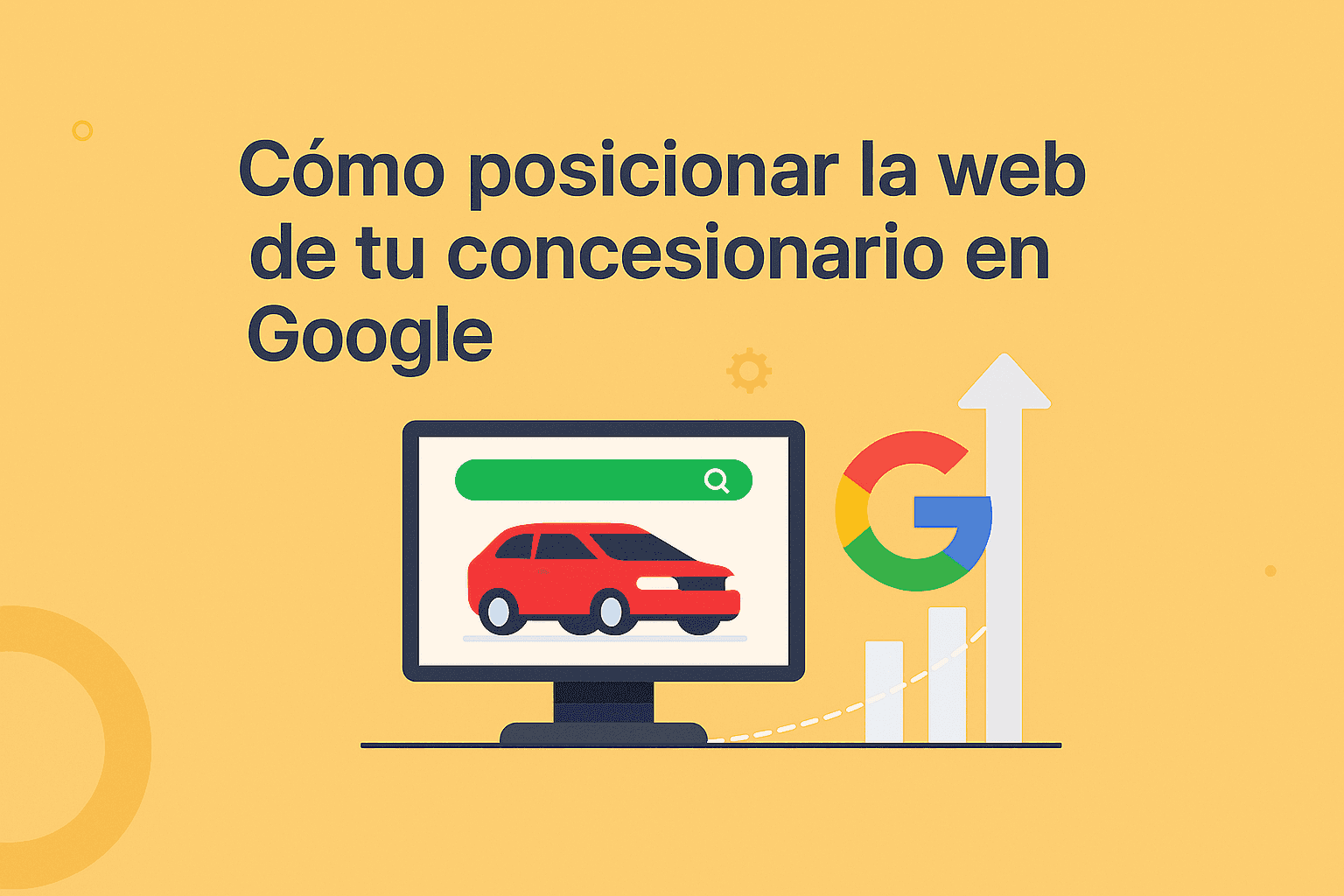
Having an attractive website is no longer enough. If your dealership does not appear in the top positions on Google when someone searches for “buy used car in [your city]”, you are losing sales every day. Local SEO is key to attracting organic customers and stopping relying solely on portals or paid advertising.
In this blog we explain how to rank your dealership website on Google step by step, with strategies you can apply from today.
What is local SEO and why is it vital for a dealership?
Local SEO consists of optimising your online presence to appear in geolocated search results. For example:
“buy a used car in Zaragoza”
“free valuation used car Madrid”
“trusted dealership in Valencia”
This type of searches reflect a high purchase intent and usually end in contact or a visit.
📍 Optimise your Google Business Profile listing (formerly Google My Business)
Your Google listing is the first digital impression for many users. You should:
Claim and verify your business
Add the exact address, opening hours and contact details
Upload real photos of the dealership and vehicles
Include local keywords in the description
Ask for reviews from your satisfied customers (and reply to them)
💡 Extra tip: Reply to reviews with keywords such as “Thank you for trusting our dealership in Seville”.
🛠️ Improve your website's on-page SEO
Your website should be designed to appeal to Google and to your customers. Apply these points:
1. Local keywords
Use phrases such as:
“used vehicles in [city]”
“guaranteed second-hand cars”
“buy a car online in [town]”
2. Clear and friendly URLs
Example: yoursite.com/stock/renault-clio-used-barcelona
3. Optimised meta tags
Each page should have:
SEO title with keyword: “Used cars in Madrid | Dealership name”
Meta description that is appealing: “Discover nearly new cars with a guarantee in Madrid. 100% online financing and delivery in 24 hours.”
4. Images with ALT text
Optimise all images (vehicles, facilities) with relevant descriptions. Example: alt="2022 Seat Ibiza at a dealership in Malaga"
🔗 Get local links (backlinks)
Google values inbound links from local or topical sites. You can get them:
By collaborating with garages, insurers or motoring blogs
By appearing in directories such as Páginas Amarillas, QDQ or local guides
By publishing press releases in media in your area
📱 Mobile First: your website must be fast and adaptable
More than 70% of traffic to dealership websites comes from mobile. Google penalises slow or poorly adapted websites.
Do this:
Optimise images so they do not weigh too much
Use a responsive design that looks perfect on mobile
Avoid aggressive pop-ups or banners that interrupt
Create useful and consistent content
Publishing content regularly helps with rankings. Some ideas:
Blogs such as: “Mistakes when buying a used car in [city]” or “How to finance your car in [city]”
Downloadable guides: “Checklist to sell your car easily”
Videos of the valuation or delivery process
💡 Pro tip: If you use a platform like Dealcar, you can integrate an optimised blog directly and manage posts easily.
Measure and improve with free tools
Install:
Google Search Console to see how users find you
Google Analytics 4 to know which pages perform best
Google PageSpeed Insights to improve speed
Conclusion
If you apply these actions consistently, your website will begin to climb the Google rankings and attract qualified traffic with no cost per click. Local SEO is a long-term investment that positions you as the leading dealership in your city.
Do you want an SEO-optimised website without complications?
🔗 Contact Dealcar and digitise your online presence from today.
Having an attractive website is no longer enough. If your dealership does not appear in the top positions on Google when someone searches for “buy used car in [your city]”, you are losing sales every day. Local SEO is key to attracting organic customers and stopping relying solely on portals or paid advertising.
In this blog we explain how to rank your dealership website on Google step by step, with strategies you can apply from today.
What is local SEO and why is it vital for a dealership?
Local SEO consists of optimising your online presence to appear in geolocated search results. For example:
“buy a used car in Zaragoza”
“free valuation used car Madrid”
“trusted dealership in Valencia”
This type of searches reflect a high purchase intent and usually end in contact or a visit.
📍 Optimise your Google Business Profile listing (formerly Google My Business)
Your Google listing is the first digital impression for many users. You should:
Claim and verify your business
Add the exact address, opening hours and contact details
Upload real photos of the dealership and vehicles
Include local keywords in the description
Ask for reviews from your satisfied customers (and reply to them)
💡 Extra tip: Reply to reviews with keywords such as “Thank you for trusting our dealership in Seville”.
🛠️ Improve your website's on-page SEO
Your website should be designed to appeal to Google and to your customers. Apply these points:
1. Local keywords
Use phrases such as:
“used vehicles in [city]”
“guaranteed second-hand cars”
“buy a car online in [town]”
2. Clear and friendly URLs
Example: yoursite.com/stock/renault-clio-used-barcelona
3. Optimised meta tags
Each page should have:
SEO title with keyword: “Used cars in Madrid | Dealership name”
Meta description that is appealing: “Discover nearly new cars with a guarantee in Madrid. 100% online financing and delivery in 24 hours.”
4. Images with ALT text
Optimise all images (vehicles, facilities) with relevant descriptions. Example: alt="2022 Seat Ibiza at a dealership in Malaga"
🔗 Get local links (backlinks)
Google values inbound links from local or topical sites. You can get them:
By collaborating with garages, insurers or motoring blogs
By appearing in directories such as Páginas Amarillas, QDQ or local guides
By publishing press releases in media in your area
📱 Mobile First: your website must be fast and adaptable
More than 70% of traffic to dealership websites comes from mobile. Google penalises slow or poorly adapted websites.
Do this:
Optimise images so they do not weigh too much
Use a responsive design that looks perfect on mobile
Avoid aggressive pop-ups or banners that interrupt
Create useful and consistent content
Publishing content regularly helps with rankings. Some ideas:
Blogs such as: “Mistakes when buying a used car in [city]” or “How to finance your car in [city]”
Downloadable guides: “Checklist to sell your car easily”
Videos of the valuation or delivery process
💡 Pro tip: If you use a platform like Dealcar, you can integrate an optimised blog directly and manage posts easily.
Measure and improve with free tools
Install:
Google Search Console to see how users find you
Google Analytics 4 to know which pages perform best
Google PageSpeed Insights to improve speed
Conclusion
If you apply these actions consistently, your website will begin to climb the Google rankings and attract qualified traffic with no cost per click. Local SEO is a long-term investment that positions you as the leading dealership in your city.
Do you want an SEO-optimised website without complications?
🔗 Contact Dealcar and digitise your online presence from today.