Capturing leads is only the first step. What truly makes the difference is how you manage them: how quickly you respond, how well you segment them, and how timely your follow-up is. In a used-car dealership, where every lead can mean a real sale, automating processes is not a luxury, it is a competitive advantage.
In this article, you will discover how to apply automation and workflows to save time, professionalise your sales management, and convert more contacts into customers, without losing the human touch.
Why is it key to automate lead management in a dealership?
78% of second-hand car buyers make their first contact online. If you do not respond quickly and with useful information, that lead will go to another dealership.
Benefits of automating:
Fast response: you can get in touch instantly, even outside working hours.
Less lead loss: every contact is recorded and followed up.
Efficient follow-up: automated messages keep the conversation alive.
Time saving: fewer repetitive tasks, more focus on closing sales.
Automating does not mean making it robotic; it means freeing up time so your sales team can focus on what matters: the relationship with the customer and closing the deal.
What processes can you automate in your dealership?
Lead capture from all channels
Whether the customer comes through a web form, WhatsApp, Facebook, Instagram or car portals, their information can be integrated directly into your CRM. This avoids errors, duplicates and delays.
Dealcar, for example, centralises all leads in a single dashboard, classifies them by channel and leaves them ready to be assigned automatically.
Automatic lead assignment
You can create rules to distribute leads intelligently:
By geographical area
By vehicle type (SUV, electric, van...)
By sales rep workload
This reduces waiting times, improves the customer experience and balances the team's workload.
Sending automated emails, SMS and messages
A well-designed automated message can open the door to a sale. Ideas:
Confirmation email + vehicle listing immediately after the first contact.
WhatsApp with a video of the vehicle or technical sheet.
SMS reminder of an arranged visit or active promotion.
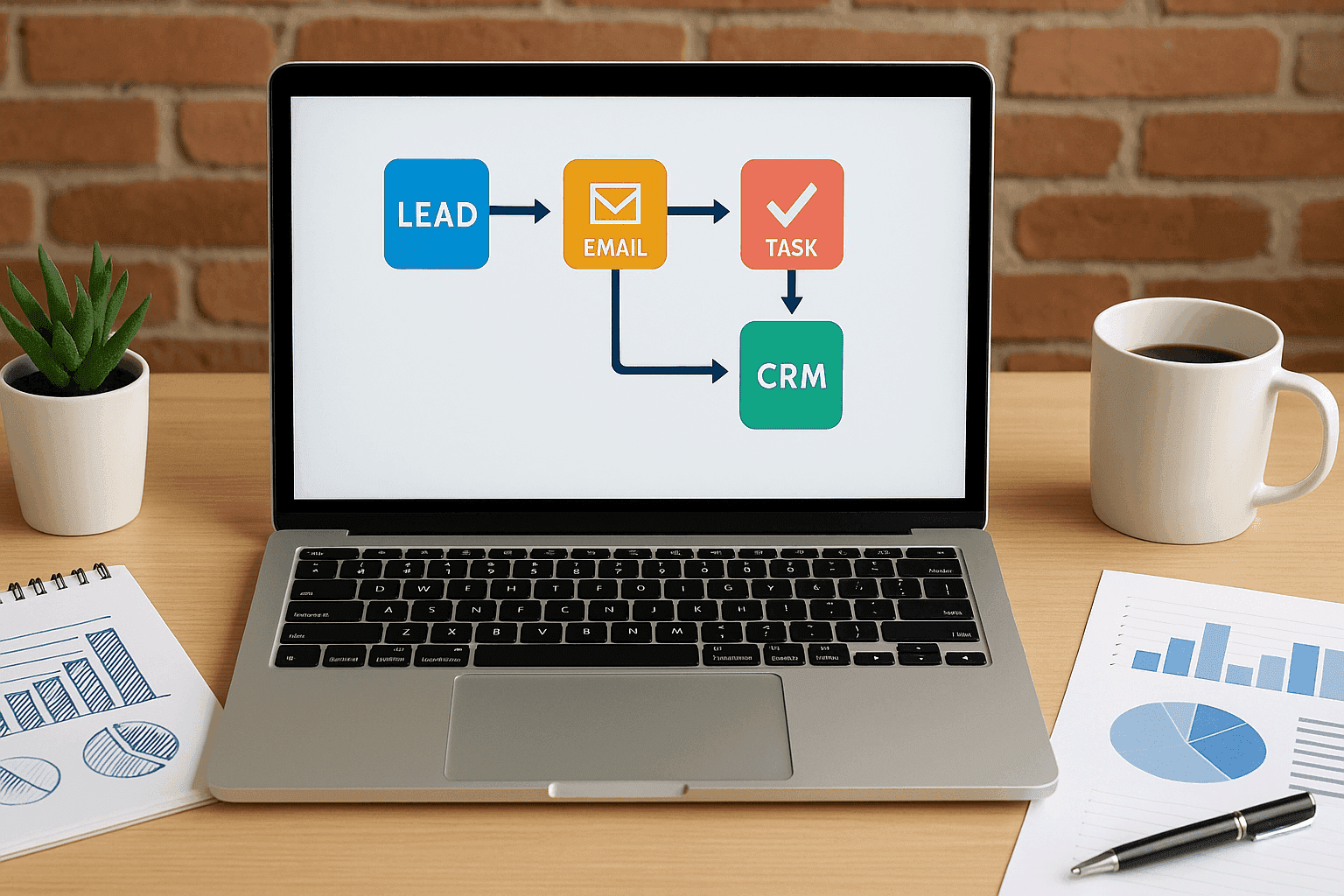
You can programme complete workflows based on user behaviour.
Internal notifications and task creation
Activate automatic alerts when:
A lead visits a listing several times.
Someone downloads a guide or leaves their phone number.
The agreed follow-up date is approaching.
You can also assign tasks to sales reps automatically when the system detects high interest.
Examples of effective workflows for dealerships
New lead via web form:
Automatic email with car listing + sales rep contact
Immediate assignment
Task to call within less than 1 hour
Lead inactive for 5 days:
Email with similar cars or current promotions
WhatsApp asking whether they are still looking for a vehicle
Lead interested in a specific model:
Sending of listing + video tour
Email with alternative models in the same category
After-sales:
Thank-you email and request for a review
Automatic reminder for a service or MOT after 6 months
What you need to start automating your dealership
You do not need to be a large company or have an IT team. You only need:
A CRM or management system connected to your website and channels
Email, SMS and WhatsApp templates tailored to each stage of the funnel
Clear workflows for each type of lead
A platform like Dealcar, which already includes all of this preconfigured for dealerships
With a good structure, you can have your automation up and running in less than a week.
Tangible benefits of automation in your day-to-day
More leads attended to: without losing opportunities through oversight.
More time to sell: sales reps dedicate their energy to what really matters.
Better conversion: a well-managed lead has a greater chance of becoming a customer.
Consistent service: all customers receive a professional, consistent experience.
Greater control: you can see what works, who performs best and how to improve.
Conclusion
Automation and workflows are the key to scaling without losing quality. If your dealership wants to sell more with less effort, you need processes that work for you even when you are not there.
Implementing an automated system not only improves your results, it also transforms the way you work: more order, more efficiency and more satisfaction for your customers.
With Dealcar you can have a complete solution to capture, classify, assign and follow up leads automatically, with an experience designed specifically for used-car dealerships.
Frequently asked questions
What is a workflow in car sales?
It is an automated sequence of actions (emails, tasks, messages) that is triggered when a lead carries out a specific action.
How many leads are lost without automation?
Between 35% and 60%, according to studies, if there is no quick response or follow-up.
Can I automate without losing the human touch?
Yes. You automate the repetitive tasks (emails, assignments) and free up time for personal service at the key moments of closing.
What tools do I need to automate?
A connected website, a CRM or a platform like Dealcar, and well-defined workflows according to your type of customer.
Start automating today and turn it into your competitive advantage. Your time is worth more when systems work for you.
Capturing leads is only the first step. What truly makes the difference is how you manage them: how quickly you respond, how well you segment them, and how timely your follow-up is. In a used-car dealership, where every lead can mean a real sale, automating processes is not a luxury, it is a competitive advantage.
In this article, you will discover how to apply automation and workflows to save time, professionalise your sales management, and convert more contacts into customers, without losing the human touch.
Why is it key to automate lead management in a dealership?
78% of second-hand car buyers make their first contact online. If you do not respond quickly and with useful information, that lead will go to another dealership.
Benefits of automating:
Fast response: you can get in touch instantly, even outside working hours.
Less lead loss: every contact is recorded and followed up.
Efficient follow-up: automated messages keep the conversation alive.
Time saving: fewer repetitive tasks, more focus on closing sales.
Automating does not mean making it robotic; it means freeing up time so your sales team can focus on what matters: the relationship with the customer and closing the deal.
What processes can you automate in your dealership?
Lead capture from all channels
Whether the customer comes through a web form, WhatsApp, Facebook, Instagram or car portals, their information can be integrated directly into your CRM. This avoids errors, duplicates and delays.
Dealcar, for example, centralises all leads in a single dashboard, classifies them by channel and leaves them ready to be assigned automatically.
Automatic lead assignment
You can create rules to distribute leads intelligently:
By geographical area
By vehicle type (SUV, electric, van...)
By sales rep workload
This reduces waiting times, improves the customer experience and balances the team's workload.
Sending automated emails, SMS and messages
A well-designed automated message can open the door to a sale. Ideas:
Confirmation email + vehicle listing immediately after the first contact.
WhatsApp with a video of the vehicle or technical sheet.
SMS reminder of an arranged visit or active promotion.
You can programme complete workflows based on user behaviour.
Internal notifications and task creation
Activate automatic alerts when:
A lead visits a listing several times.
Someone downloads a guide or leaves their phone number.
The agreed follow-up date is approaching.
You can also assign tasks to sales reps automatically when the system detects high interest.
Examples of effective workflows for dealerships
New lead via web form:
Automatic email with car listing + sales rep contact
Immediate assignment
Task to call within less than 1 hour
Lead inactive for 5 days:
Email with similar cars or current promotions
WhatsApp asking whether they are still looking for a vehicle
Lead interested in a specific model:
Sending of listing + video tour
Email with alternative models in the same category
After-sales:
Thank-you email and request for a review
Automatic reminder for a service or MOT after 6 months
What you need to start automating your dealership
You do not need to be a large company or have an IT team. You only need:
A CRM or management system connected to your website and channels
Email, SMS and WhatsApp templates tailored to each stage of the funnel
Clear workflows for each type of lead
A platform like Dealcar, which already includes all of this preconfigured for dealerships
With a good structure, you can have your automation up and running in less than a week.
Tangible benefits of automation in your day-to-day
More leads attended to: without losing opportunities through oversight.
More time to sell: sales reps dedicate their energy to what really matters.
Better conversion: a well-managed lead has a greater chance of becoming a customer.
Consistent service: all customers receive a professional, consistent experience.
Greater control: you can see what works, who performs best and how to improve.
Conclusion
Automation and workflows are the key to scaling without losing quality. If your dealership wants to sell more with less effort, you need processes that work for you even when you are not there.
Implementing an automated system not only improves your results, it also transforms the way you work: more order, more efficiency and more satisfaction for your customers.
With Dealcar you can have a complete solution to capture, classify, assign and follow up leads automatically, with an experience designed specifically for used-car dealerships.
Frequently asked questions
What is a workflow in car sales?
It is an automated sequence of actions (emails, tasks, messages) that is triggered when a lead carries out a specific action.
How many leads are lost without automation?
Between 35% and 60%, according to studies, if there is no quick response or follow-up.
Can I automate without losing the human touch?
Yes. You automate the repetitive tasks (emails, assignments) and free up time for personal service at the key moments of closing.
What tools do I need to automate?
A connected website, a CRM or a platform like Dealcar, and well-defined workflows according to your type of customer.
Start automating today and turn it into your competitive advantage. Your time is worth more when systems work for you.